
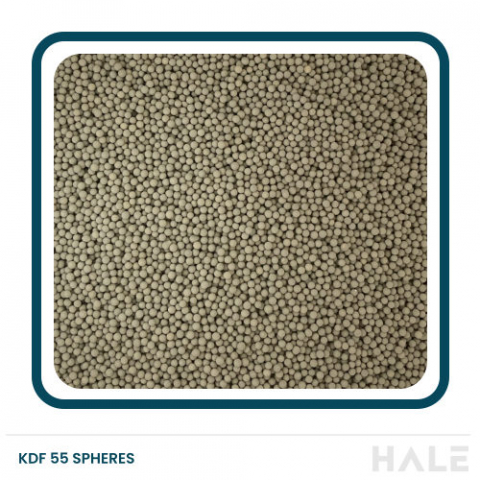
KDF-55 Spheres
What Does KDF-55 Adsorb?
Comprehensive Contaminant Removal
-
Eliminates chlorine, pesticides, and organic compounds
-
Removes rust, unpleasant tastes, and odors
-
Effectively reduces soluble heavy metals
Pb²⁺ – Lead ion (divalent lead, commonly from plumbing corrosion)
Cd²⁺ – Cadmium ion (toxic heavy metal, often industrial discharge)
Cr⁶⁺ – Hexavalent chromium ion (carcinogenic, from industrial waste)
As³⁺ – Arsenite ion (trivalent arsenic, more toxic than As⁵⁺)
Hg²⁺ – Mercuric ion (divalent mercury, highly toxic)
Mn²⁺ – Manganese ion (causes staining and metallic taste)
Ni²⁺ – Nickel ion (allergenic, from industrial runoff)
Al³⁺ – Aluminum ion (linked to turbidity and pipe corrosion)
Fe³⁺ – Ferric ion (trivalent iron, causes rust-colored water) -
Targets hydrogen sulfide and calcium deposits
Microbial Control
-
Inhibits algae and fungal growth
-
Helps control bacterial proliferation
System Optimization
-
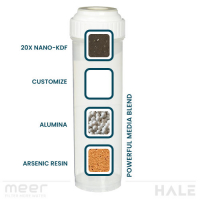
Ideal as a pre-filter for reverse osmosis, deionization, and ion exchange systems
-
Extends the lifespan of subsequent filtration stages by reducing contaminant load
KDF: Kinetic Degradation Fluxion
Kinetic Degradation Fluxion (KDF) refers to its core mechanism:
- "Kinetic" = Motion/action (referring to the electrochemical process)
- "Degradation" = Breaking down contaminants
- "Fluxion" = Flow (operates in dynamic water systems)
KDF’s redox (oxidation-reduction) properties enable it to chemically transform contaminants, making it a powerful complement to mechanical filtration methods. When paired with activated carbon, it creates a multi-barrier defense for superior water purity across residential, commercial, and industrial applications.
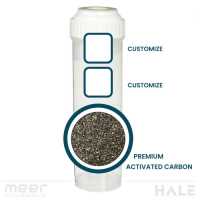
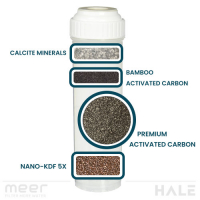

Our philosophy is to foster a strong, holistic association between the vital biological benefits of clean water and the critical importance of preventing the damage dirty water causes to homes and businesses plumbing and support equipment.
 412-848-5058 |
 Located in Pittsburgh, PA

