
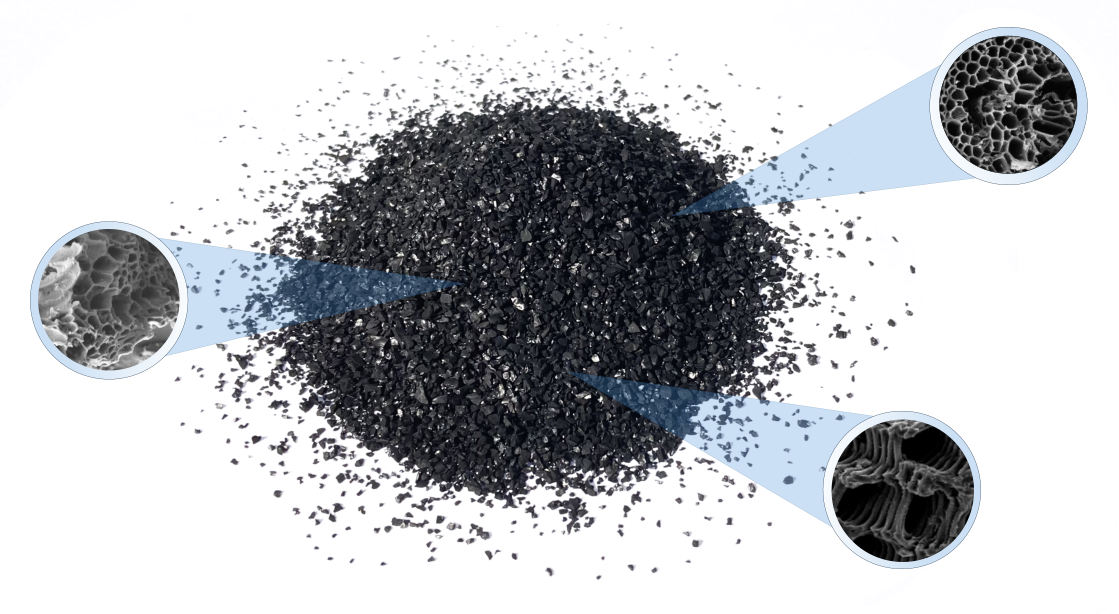
Activated Carbon
A significant filtration media to clean water. Quality Counts.

Jacobi Granular AC (Chloramine Focus)

Coconut Activated Carbon
Our core activated carbon ingredient is sourced from Jacobi Carbons because they are world renowned for producing exceptionally high quality coconut activated carbon products. Jacobi owns their own coconut plantation and are able to control every step of production to final product bagging. Their exceptional quality means more water can pass through their media while still producing beyond standard clean water for point-of-entry (large filtration tanks) and point-of-use (smaller filtration tank for direct consumption).
Filter, Reduce, Adsorb chlorine, chloramine, hydrogen sulfide, organic compounds, chlorinated by-products (chloroform, trihalomethanes (THM’s), and many others), taste, odor, and so much more.
What Does Activated Carbon Adsorb?
Organic Compounds
highly effective at removing organic contaminants:
-
Pesticides & herbicides (Atrazine, Glyphosate (Roundup), 2,4-D)
-
Volatile Organic Compounds (VOCs) – solvents, fuels, industrial chemicals (Benzene, Toluene, Xylene,
Formaldehyde, Acetone, Petroleum hydrocarbons). Pharmaceutical Residues (Antibiotics, Hormones (estrogen, BPA), Painkillers (ibuprofen, acetaminophen)) -
Disinfection byproducts like Trihalomethanes (THMs) and Haloacetic acids (HAAs)
-
Chlorine-based compounds (sodium hypochlorite, chloramines)
-
Ozone (O₃) – breaks down organic contaminants
-
Total Organic Carbon (TOCs) – decaying plant/animal matter
-
Removes chlorine and chloramine taste and odor from water.
While not all heavy metals bind easily, activated carbon can adsorb:
-
Mercury
-
Lead (Pb) – especially when combined with other media like KDF
-
Cadmium (Cd)
-
Copper (Cu)
-
Nickel (Ni)
-
Chromium (Cr) – depends on oxidation state
- Arsenic (As) – limited effectiveness (works better with iron-enhanced carbon)
-
Eliminates hydrogen sulfide (rotten egg smell)
-
Filters out fine particles, residual disinfectants, and turbidity, rust and silt
Activated carbon does not kill bacteria/viruses, but it can:
-
Remove organic matter that bacteria feed on
-
Improve the effectiveness of UV or other disinfection methods
Jacobi AquaSorb: Superior Chloramine Removal Through Advanced Catalytic Technology
Renowned for their exceptional water purification performance. Its advanced formulation combines cutting-edge technology to deliver unmatched adsorption efficiency, effectively eliminating organic pollutants, unpleasant tastes, and odors from water.
Jacobi AquaSorb sets the industry standard for chloramine (and chlorine) removal through its innovative catalytic carbon technology. Unlike conventional activated carbons that rely solely on physical adsorption, AquaSorb's advanced formulation facilitates catalytic decomposition of chloramines at the carbon surface. This enhanced reaction is enabled by:
-
A precisely engineered pore structure that maximizes reactive surface area
-
Optimized surface chemistry that promotes catalytic breakdown
-
An extensive internal pore network for superior contaminant access
Key Performance Advantages:
-
Industry-leading chloramine removal through catalytic conversion
-
Rapid dechlorination of chlorine-based compounds
-
Exceptionally clear effluent with minimal turbidity
-
Proven effectiveness across all scales - from residential to municipal systems
By combining catalytic activity with optimized physical properties, the actived carbon we use delivers unmatched performance in chloramine removal while maintaining the clarity and purity of treated water. This makes it the preferred choice for applications where reliable chloramine reduction is critical.
What Activated Carbon Does Not Remove Effectively
-
Dissolved salts (e.g., sodium, fluoride, nitrates – requires reverse osmosis)
-
Hard water minerals (calcium, magnesium – needs a water softener)
-
Most viruses & bacteria (requires UV, boiling, or chemical disinfection)
For best results, combine activated carbon with other filtration methods (KDF, reverse osmosis, or ceramic filters) to target a broader range of contaminants
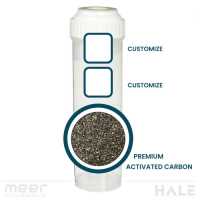
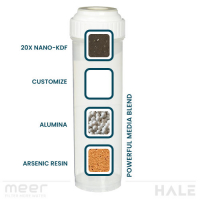
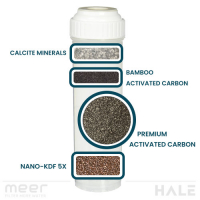

Our philosophy is to foster a strong, holistic association between the vital biological benefits of clean water and the critical importance of preventing the damage dirty water causes to homes and businesses plumbing and support equipment.
 412-848-5058 |
 Located in Pittsburgh, PA

